
Systems Change Lab
CAPACITY BUILDING | SYSTEMS THINKING | FACILITATION
Client
The World Bank
September 2025 - March 2026
Location • Latin America & Caribbean
Context
The Health Systems Flagship Programme is a World Bank initiative designed to enhance the capacity of multisectoral policymakers, practitioners, and staff in navigating the complexities of health system reforms.
Working towards Universal Health Coverage, the programme guides participants through a six-month journey spanning online modules, a Systems Change Lab, technical deep dives, implementation support, and communities of practice. Its collaborative learning approach aims to turn a community of practice into a system of influence, surfacing the most significant health system performance challenges and enabling effective policy dialogue across countries.
Brief
Designing and delivering a practical Systems Change Lab to help senior policymakers and practitioners across Latin America and the Caribbean apply systems thinking and futures practices to complex health system challenges.
Making complex concepts such as systems thinking, futures and leverage points accessible and actionable, with a focus on applying them to real-world health system challenges.
Approach
Designing a learning experience that moves from understanding to action: The Systems Change Lab was designed as a journey that helped participants move from exploring complexity, to imagining possible futures, identifying opportunities for intervention, and applying systems approaches to their own contexts.
Understand the system
Developing shared ways of seeing complexity
Using systems thinking as a foundation, participants explored the forces shaping their challenges and developed a shared language for understanding systems.
Explore possible futures
Creating space to imagine, challenge and adapt
Futures practices helped participants move beyond current constraints, explore uncertainty and consider how systems could evolve over time.
Identify opportunities for change
Moving from insight towards action
Participants explored where interventions could create meaningful shifts, translating systems understanding into practical opportunities.
Apply learning in practice
Grounding concepts in public sector reality
The learning experience was designed around the realities of government delivery, creating space for reflection, peer exchange and application to participants’ own contexts.
Making systems thinking practical

Using the Iceberg Model to explore what sits beneath the surface
The systems thinking component was built around the Iceberg Model, helping participants explore the different layers shaping the challenges they face — from visible events and problems, to underlying patterns, structures and mental models.
The activity created a shared way for participants to examine the factors influencing their health systems and move beyond surface-level symptoms towards deeper systemic considerations.
Making futures tangible
Moving from future thinking to future exploration
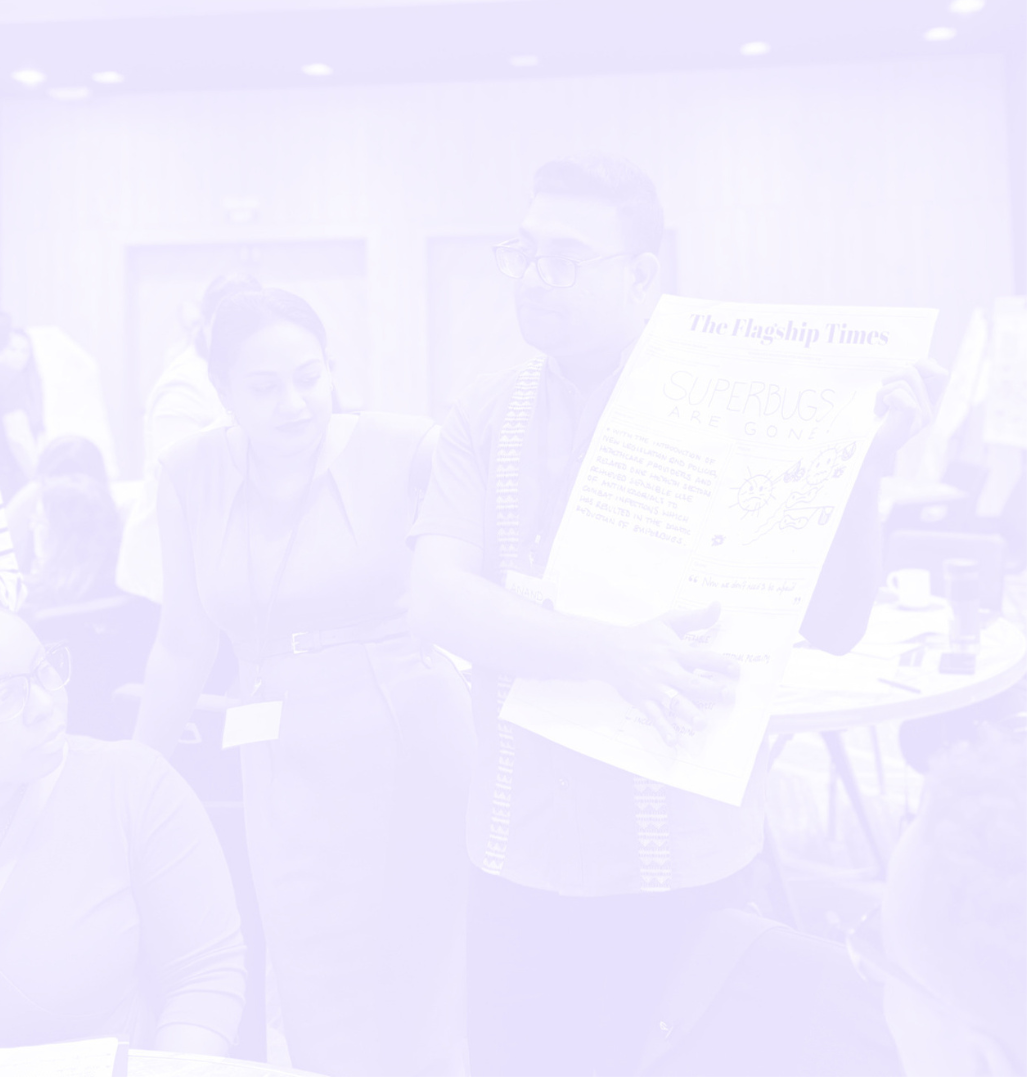
The futures session combined theory with practical activities designed to help participants explore possible futures. Participants created future newspaper headlines, developed trend cards, built scenarios and used backcasting to explore pathways towards a desired future.
The session also introduced potential disruptors or “shocks” to challenge participants’ scenarios and explore how their systems could remain resilient as conditions change.
Making leverage points actionable
Turning systems insights into intervention opportunities
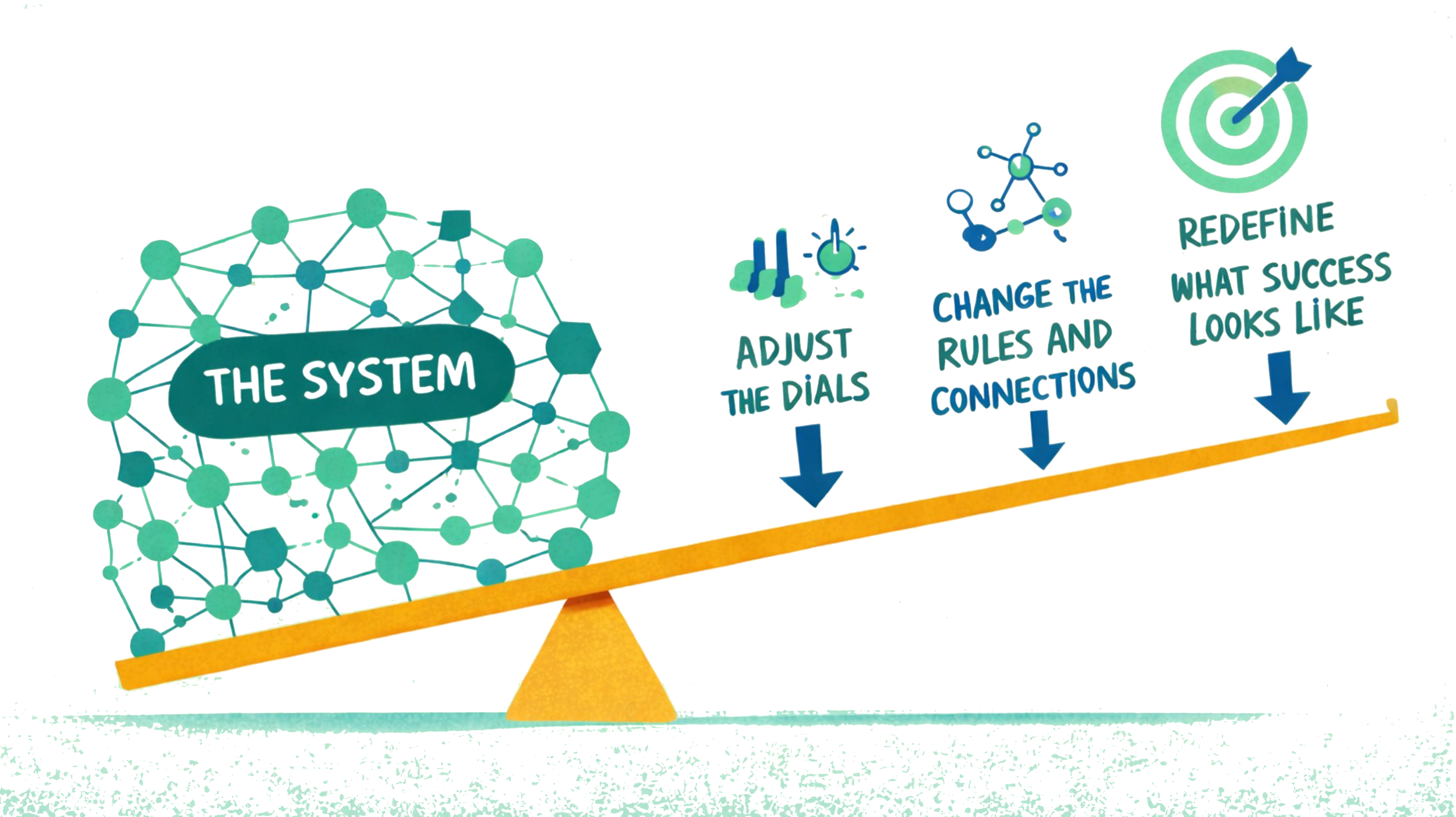
To support participants in moving from understanding systems to identifying opportunities for action, we developed a practical leverage points framework.
The framework organised interventions across three areas:
Adjusting the dials — working with existing approaches and improving how they operate
Changing the rules and connections — shifting relationships, structures and ways of working
Redefining what success looks like — changing the goals, measures and assumptions that shape decision-making
Participants used the framework alongside the opportunity areas identified through their systems mapping to explore what types of interventions could create greater leverage within their contexts.
Designing for public sector realities
Creating space for reflection, exchange and application
Facilitating a large, multilingual group of public servants from across Latin America and the Caribbean required balancing theoretical content with the realities of public sector delivery.
Drawing on my own experience as a civil servant, I was able to connect with the constraints, trade-offs and challenges participants face when translating policy ambition into practice. This helped create a dynamic that moved beyond traditional training towards peer exchange, reflection and shared learning.