Prison Leavers Project
SERVICE DESIGN | RESEARCH | PROTOTYPING
Client
Ministry of Justice
February 2021 - April 2023
Location • London, United Kingdom
Context
The Prison Leavers Project was a two-year programme exploring how to improve the experience of people leaving prison and support their rehabilitation and resettlement.
It was one of the first times the Ministry of Justice brought designers and researchers together with policy makers, operational leads and people with lived experience to work on these challenges.
I worked across multiple workstreams throughout the two years, bringing service design and systems thinking into different areas of the programme rather than applying one fixed process to every problem.
Brief
To identify the biggest challenges people experience when leaving prison and explore opportunities to improve their rehabilitation and resettlement — developing interventions that respond to people's needs while working within the realities of the justice system.
Approach / Design principals
Across the workstreams, these principles were applied through different design processes depending on the problem, bringing together people with lived experience, charities, frontline colleagues, policy makers and operational teams.
Designing around people's realities
Understand people's experiences and needs while recognising that individual challenges are shaped by the wider systems around them.
Addressing causes, not symptoms
Look beyond immediate pain points to identify root causes, dependencies and system-wide opportunities for change.
Learning through evidence
Ground decisions in research, test ideas in context, measure outcomes and iterate based on what was learned.
Designing for change that lasts
Develop approaches that could work within operational constraints while challenging those constraints where necessary, with potential to adapt and scale.
Designing with people
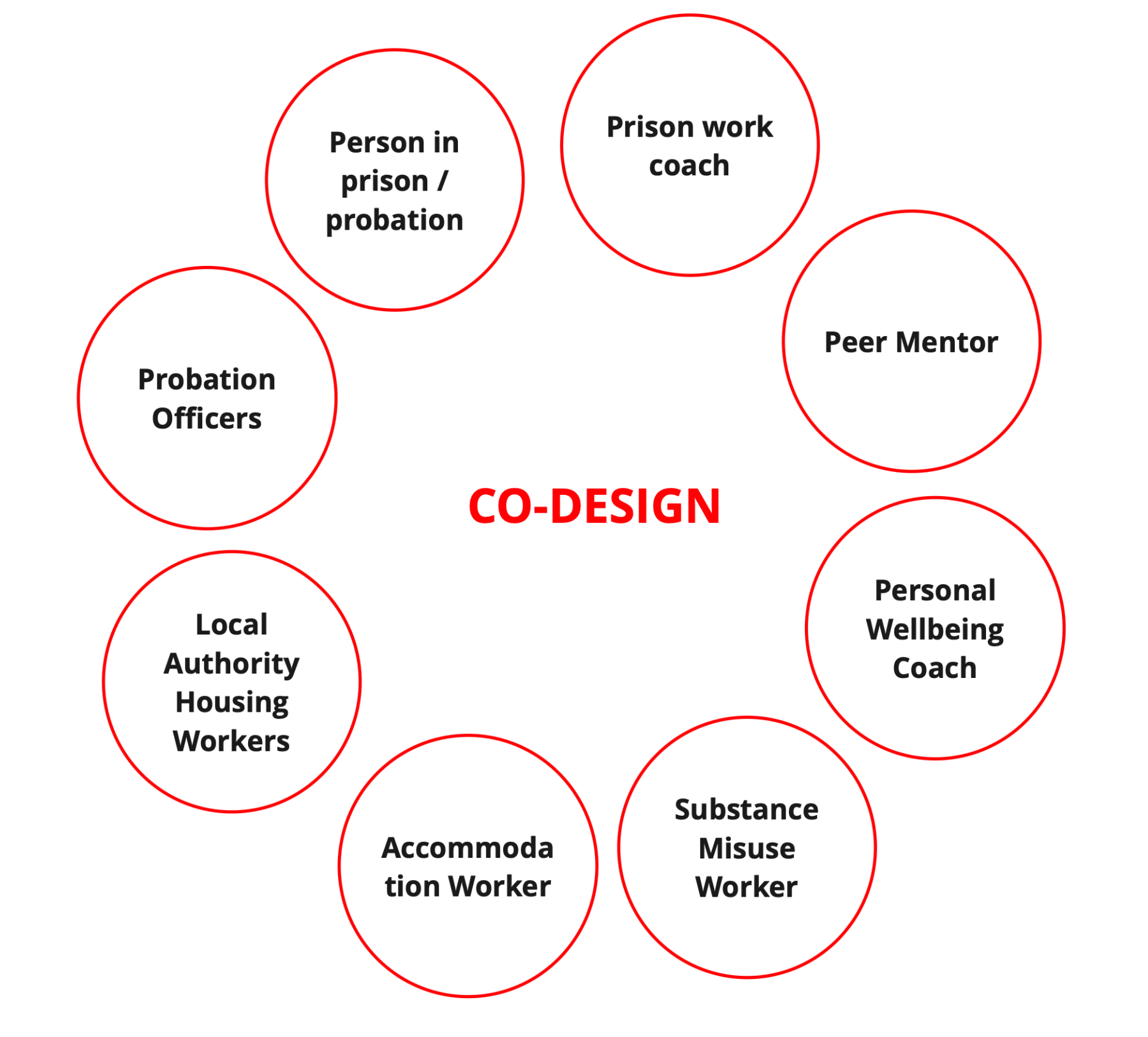
Building relationships to design from lived experience
Co-design was central to how ideas and prototypes were developed. I worked closely with charities supporting people inside and outside prison, building relationships and trust over time, while also involving the frontline colleagues who would ultimately deliver the interventions.
Ideas were developed through facilitated co-design and ideation, then translated into digital and non-digital prototypes that could be tested and refined with the people they were intended to support.
Reimagining the day of release
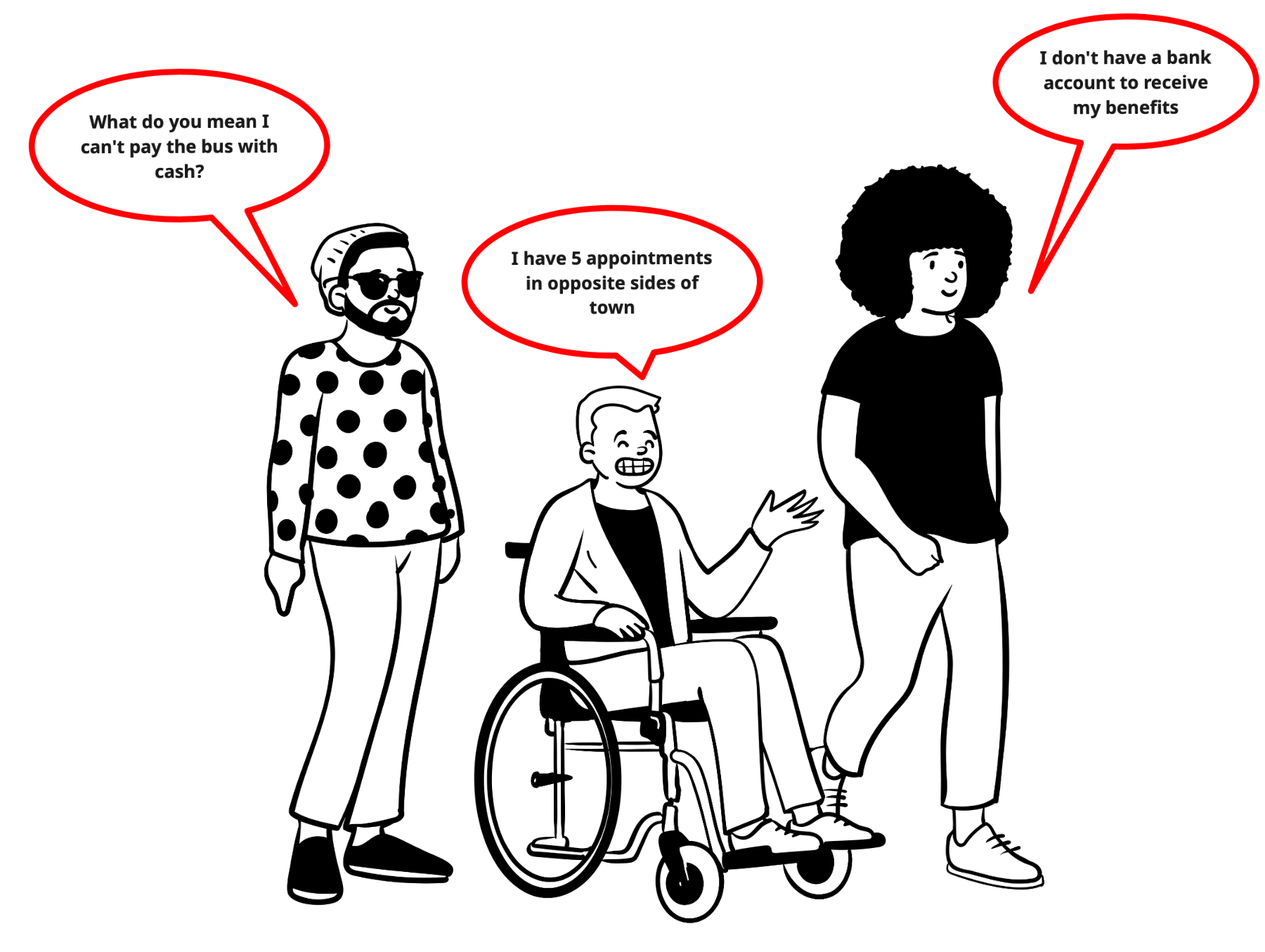
Treating release as a transition, not an isolated moment
The day of release is one of the most complicated touchpoints in someone's rehabilitative journey. Research showed that many of the challenges experienced on the day itself were connected to things that had happened — or had not happened — before release.
The work focused on understanding this complexity and exploring how the transition between custody and community could be improved.
Through co-design, facilitated ideation and prototyping, I worked with people to develop and test a proof of concept. Prototypes were tested in practice, including through role play, and practical elements such as information packs and forms were developed and refined with people in prison.
The intervention demonstrated positive impact and subsequently became business as usual, connecting services that had not traditionally worked closely together and identifying simpler ways to support people across the transition from prison into the community.
Designing for different experiences
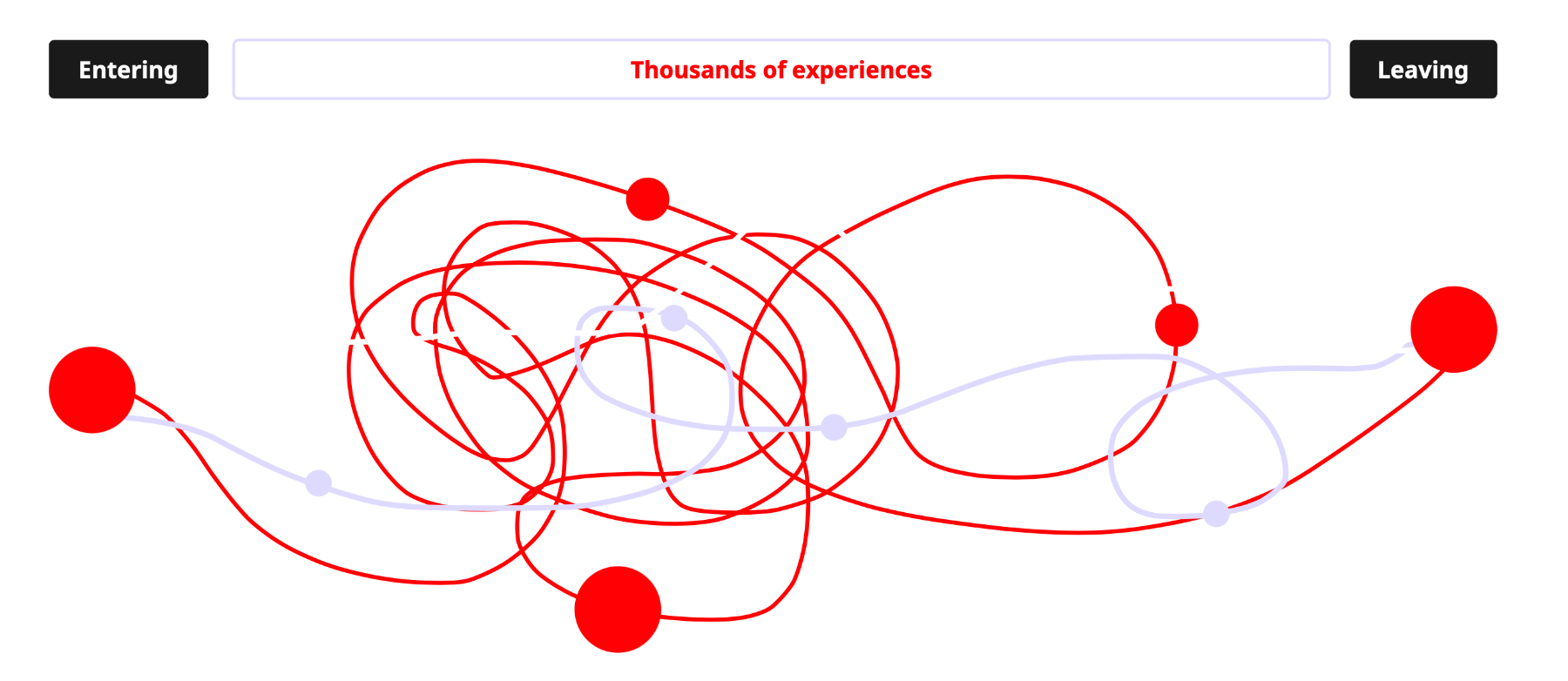
Moving beyond one-size-fits-all approaches
Other workstreams explored how different groups experienced prison and resettlement, including people on remand, older people in prison and the different activities people engage with during custody.
For people on remand, research explored their specific needs, pain points and opportunities for intervention, contributing to policy change that brought this population into relevant policy frameworks.
Work with older people explored the physical and psychological challenges associated with spending long periods in prison, including the transition back into the community and rebuilding connections outside prison.
Another workstream examined the activities people engage with during custody, questioning a one-size-fits-all approach and exploring how activities could better contribute to individual rehabilitation and resettlement needs.
Reflections / learnings
The project demonstrated how bringing design, research, policy, operations and lived experience together could move work beyond identifying problems towards testing and implementing responses.
The work contributed to changes in policy and practice, including the intervention that became business as usual and the inclusion of previously under-represented experiences within policy frameworks.
More broadly, the project helped establish design and research as part of how complex policy problems could be explored and developed within the Ministry of Justice.
The project also created an opportunity to introduce agile ways of working into traditionally waterfall policy processes. Rather than treating these approaches as competing models, the work explored how both could flex and complement each other in practice — creating space to research, test and iterate while still working within the structures and constraints of policy development.
This meant adapting the design process to the realities of government, rather than expecting either design or policy to follow a prescribed methodology.